
New road tunnel to open in London
Transport for London (TfL) has confirmed that the new Silvertown Tunnel will open on 7 April, 2025. The new tunnel,...
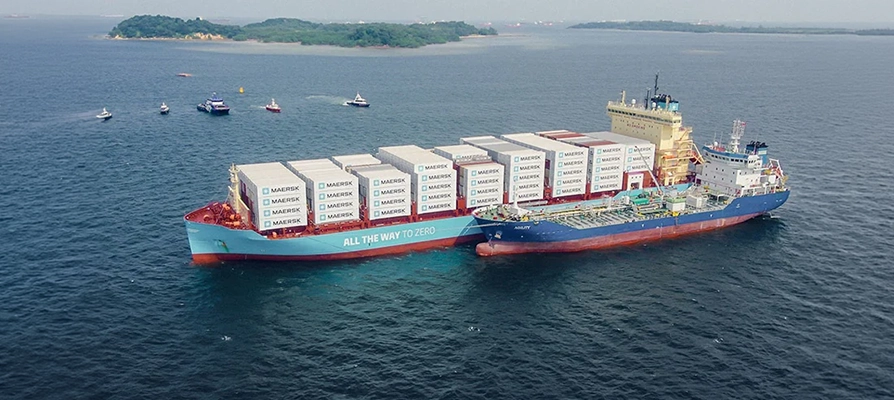
A P Moller – Maersk (Maersk) and Equinor have signed an agreement securing supply of green methanol for Maersk’s landmark, new methanol-enabled feeder vessel during its initial months of operation from September 2023 and into the first half of 2024.
The agreement ensures green methanol supply for the ship from its entry into operation on a loop from Northern Europe into the Baltic Sea. The green methanol will be bunkered in Rotterdam.
“Equinor is pleased to be partnering up with Maersk in delivering greener fuels to the marine industry,”said Alex Grant, Senior Vice President for the liquid commodity segment at Equinor. “Equinor is an established player in the European methanol market through its production plant at Tjeldbergodden and we have ambitions to be a key provider of green methanol in the marine fuel segment.”
The biomethanol is produced from biogas from manure. The biogas is upgraded to biomethane and injected into the existing gas grid and the methanol is produced from the biomethane in the grid on a mass-balance basis. The existing European biogas certificate system is used to trace the attributes of the biomethane to the biomethanol and safeguard against double-claims. This way, green methanol can be produced in existing facilities using existing infrastructure and plants enabling a quick route to market.
The method can contribute to a greener gas grid while capturing harmful methane emissions that would arise from the manure feedstock if left untouched. The biomethanol is ISCC EU certified in accordance with the EU Renewable Energy Directive.
Maersk defines ’green fuels’ as fuels with low to very low GHG emissions over their life cycle compared to fossil fuels. Different green fuels achieve different life cycle reductions depending on their production pathway. The term ‘low’ refers to fuels with 65-80% life cycle GHG reductions compared to fossil fuels. ‘Very low’ refers to fuels with 80-95% life cycle GHG reductions compared to fossil fuels.
Maersk has an ambitious 2040 target of net zero greenhouse gas emissions and aims to transport a minimum of 25% of ocean cargo using green fuels by 2030. The 2,100 TEU (twenty-foot-equivalent) feeder vessel is an important step toward the long-term objective of gradually renewing the entire Maersk fleet to operate solely on green fuels. Maersk has 24 additional methanol vessels on order for delivery between 2024 and 2027 and has a policy to only order new, owned vessels that come with a green fuel option.
Read also:
Atlas survey highlights career relocation decisions – Euromovers
DKV expands charging network in Italy – Euromovers
Change to the issuing of ECMT Permits – Euromovers
CMA CGM and Maersk Join Forces to Decarbonize Shipping
Atlas Van Lines 2022 Migration Patterns Study – Euromovers
Jack Griffin receives Lifetime Achievement Award – Euromovers
Companies Partner to Improve Europe’s EV Charging Network
New electric range from Scania – Euromovers
Europe’s leaders in EV adoption – Euromovers
New director of claims at Atlas – Euromovers
Euromovers virtual meeting success – Euromovers
Stay updated with the latest news, tips, and insights from the world of relocation. Our blog shares expert advice, helpful guides, and stories to make your moving experience easier and more informed.
Transport for London (TfL) has confirmed that the new Silvertown Tunnel will open on 7 April, 2025. The new tunnel,...

According to a new paper by DNV issued on 21 October 2025, shifting environmental requirements are reigniting interest in nuclear...
Nord-Transport AG (“NT”) in Basel has become part of the Schneider Group. NT has strong local roots, acts globally and...