
New road tunnel to open in London
Transport for London (TfL) has confirmed that the new Silvertown Tunnel will open on 7 April, 2025. The new tunnel,...
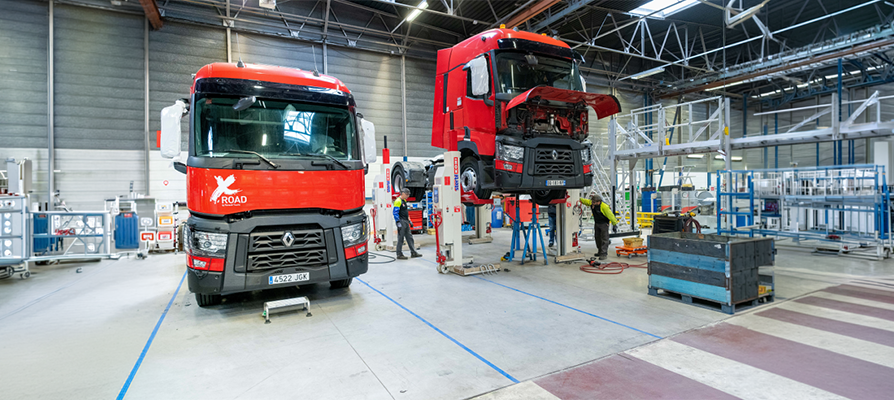
Renault Trucks is stepping up its pace in what it terms the circular economy by regenerating, repurposing and recycling vehicles from its fleet and offering used vehicles through its network of specialised centres. Renault is responding in particular to the lack of certain types of used trucks in Europe and, more generally, to the shortage of raw materials that has affected the industry since the start of the COVID pandemic.
In 2021, the rate of regenerated or repurposed trucks rose to 6% of used trucks sold by the company. Renault says the circular economy also cuts CO2 emissions by 14.4 tons for each reconditioned or recycled vehicle.
The vehicles are aimed at specific customers who, for economic, tactical or environmental reasons, deliberately choose not to use a new truck. They also meet a need for immediate availability against a background of shortages.
The circular economy developed by Renault Trucks is based on three pillars:
Regenerate: Vehicles that have been used intensively for three or four years are reconditioned in one of the company’s Used Trucks Centres and updated with more recent software. They are then returned to their owners to be put back on the road for another three years of operation, or resold. These regenerated trucks will therefore be used to their full capacity, ensuring continued operation beyond the one million kilometre mark.
Repurpose: Used Renault trucks are transformed using strict industrial processes to render them suitable for a new purpose. At the Used Trucks Factory, a specialised used truck transformation workshop located at Bourg-en-Bresse in France, long-haulage tractors are turned into rigids and other types of vehicles. In dealerships, some trucks can also be retrofitted to become compatible with B100 biofuel.
Recycle: This consists of recovering parts that can be reconditioned and then reintroduced into the after-sales circuit. Remanufacturing operations for engines, gearboxes, injectors and particle filters are currently conducted at the manufacturer’s plant in Limoges. Renault is also considering setting up an integrated chain for the recycling and reuse of parts for heavy goods vehicles.
Renault Trucks is part of the Volvo Group, one of the world’s leading manufacturers of trucks, coaches, buses and construction machines.
Photo: Renault Trucks Used Trucks Factory at Bourg-en-Bresse.
Stay updated with the latest news, tips, and insights from the world of relocation. Our blog shares expert advice, helpful guides, and stories to make your moving experience easier and more informed.

Transport for London (TfL) has confirmed that the new Silvertown Tunnel will open on 7 April, 2025. The new tunnel,...

According to a new paper by DNV issued on 21 October 2025, shifting environmental requirements are reigniting interest in nuclear...
Nord-Transport AG (“NT”) in Basel has become part of the Schneider Group. NT has strong local roots, acts globally and...